How we chose
We assessed exact current Australian models, availability, skin price, SDS Plus scope, impact energy, drilling capacity, speed, chiselling capability, anti-kickback protection, vibration control, dust-extractor compatibility, motor architecture, tool weight, battery platform, runtime implications, warranty, repair and service, exact-model owner evidence and specialist evidence. Worth Buying scores are editorial judgements, not calculations from customer stars. Manufacturer joule, vibration and performance figures remain manufacturer data unless independently measured.
Serious contenders reassessed
DeWalt DCH263N-XJ: is a strong 28mm brushless near-miss with Active Vibration Control and broad XR support. Bosch costs more but adds 3.4J output, KickBack Control, Vibration Control, a dedicated dust solution and a longer registered warranty.
DeWalt DCH273N-XJ: is the low-vibration professional alternative with 2.1J output, anti-rotation control and extractor compatibility. Bosch provides more impact energy; Ryobi delivers stronger DIY value.
HiKOKI DH3628DA(H4Z): is technically excellent, with 3.2J, RFC reactive-force control, UVP vibration protection and a 28mm capacity. Its 36V MultiVolt commitment and thinner owner evidence make Bosch the cleaner broad recommendation.
AEG A18FRH0: delivers 2.5J, 26mm capacity and strong exact-model Australian feedback. Ryobi provides similar headline output for $100 less, while Bosch adds more advanced protection above it.
Bosch GBH 18V-22: is the lighter professional option for overhead work and smaller anchors. The 1.9J design prioritises portability over the broader workload of the GBH 18V-28 DC.
Makita DHR242Z / DHR243Z: remain mature LXT choices with strong service history. Current pricing and the protection/output mix are less compelling than Ryobi on value, Bosch on balance or Milwaukee on maximum SDS Plus output.
Ryobi R18SDS-0 and Ozito PXRHS-300: are cheaper options for occasional small masonry jobs, but the brushless 2.5J RSDS18X is the stronger long-term serious-DIY recommendation.
Bosch Professional GBH 18V-28 DC
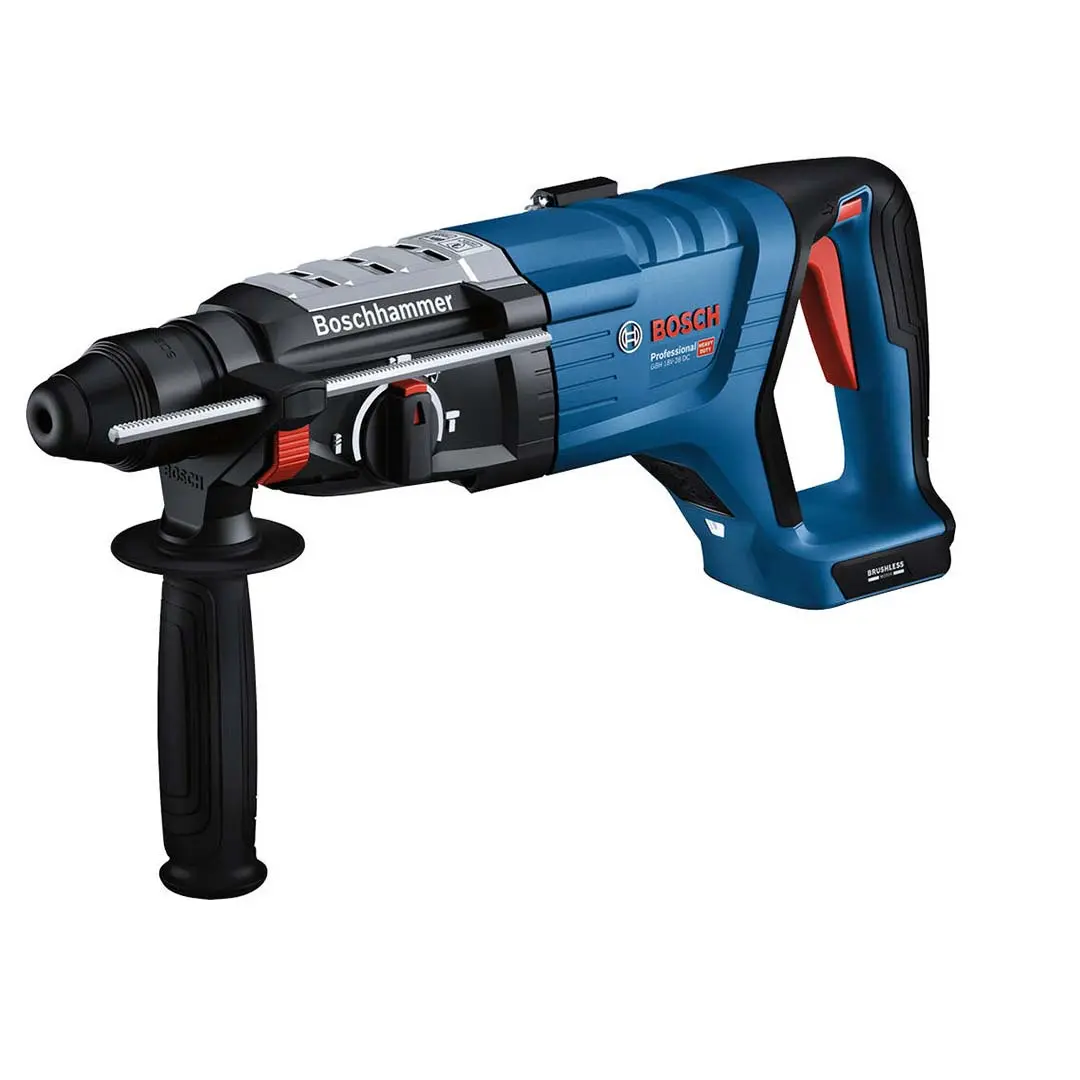
Exact GBH 18V-28 DC tool architecture shown. Australian order number 0611919040; tool only, with battery, charger and extractor sold separately.
The exact GBH 18V-28 DC, order 0611919040, is an 18V brushless SDS Plus tool rated at 3.4J, 28mm maximum concrete drilling, up to 4,250bpm and 950rpm. Bosch lists about 3.0kg excluding battery. It provides rotary drilling, hammer drilling and hammer-only chiselling, plus KickBack Control, Vibration Control and restart protection.
KickBack Control helps reduce dangerous tool rotation if a bit binds; it cannot prevent every reaction. Vibration Control reduces transmitted vibration but does not make long exposure harmless. The optional GDE 28 D integrated extractor is useful for indoor and overhead anchors, but does not eliminate respirable silica risk.
The main drawbacks are its roughly $579 skin price, thin Australian exact-model review depth and D-handle bulk. Bosch Professional's qualifying-tools warranty extends to six years with eligible online registration; check current registration terms.
What owners say
Australian exact-model retailer evidence was too limited to establish a dependable local rating. International exact-model feedback is positive about power, balance and extractor integration, but is not presented as Australian evidence.
Pros
- Strong 3.4J output
- 28mm concrete capacity
- KickBack Control and Vibration Control
- Restart protection
- Optional dedicated GDE 28 D extractor
- AMPShare platform and long registered warranty
Cons
- Expensive skin
- Thin exact-model Australian owner evidence
- Heavier than compact SDS tools
- Dust extractor costs extra
- Less output than Milwaukee
Ryobi 18V ONE+ HP Brushless SDS Rotary Hammer RSDS18X
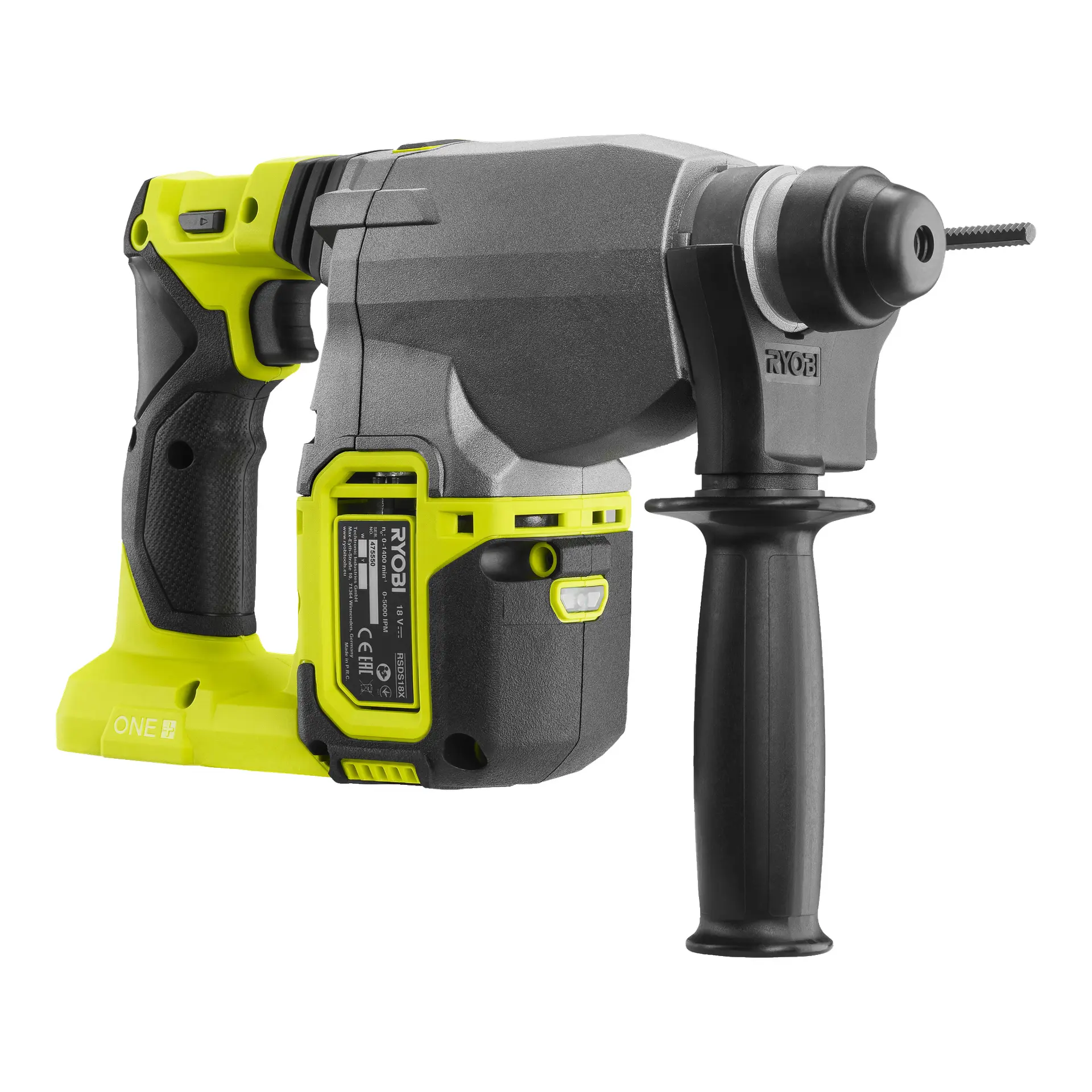
Exact RSDS18X tool architecture shown. Bunnings I/N 0294857; tool only, with battery and charger sold separately.
Ryobi lists 2.5J impact energy, 26mm masonry capacity, up to 5,000 impacts per minute, 1,400rpm and 2.5kg bare weight. It supports rotary drilling, rotary hammering and hammer-only chiselling, with chisel-position adjustment, an anti-vibration handle, LED, auxiliary handle and depth guide.
The exact product page does not advertise an electronic anti-rotation system comparable with Bosch KickBack Control or Milwaukee AUTOSTOP, so none is claimed here. Its 2.5J output suits anchors, concrete and masonry holes, tile removal and small chasing—not sustained breaker work.
Ryobi offers a four-year standard replacement warranty, extending eligible ONE+ tools to six years when registered within 30 days. Battery coverage is separate, and the service model is replacement-oriented rather than a normal repair network.
What owners say
Ryobi showed about 4.9/5 from 153 reviews, while Bunnings showed about 4.9/5 from 136. These source snapshots are kept separate and likely overlap heavily; they are not combined into a fabricated 289-review pool.
Pros
- Excellent $299 value
- Brushless 2.5J system
- 26mm masonry capacity
- Three working modes
- Anti-vibration handle
- Deep exact-model AU feedback
- Large ONE+ ecosystem
Cons
- No advertised electronic kickback system
- Lower output than premium tools
- Replacement-oriented warranty
- Not intended for sustained demolition
- Battery and charger cost extra
Milwaukee M18 FUEL 28mm SDS Plus Rotary Hammer M18FHP-0
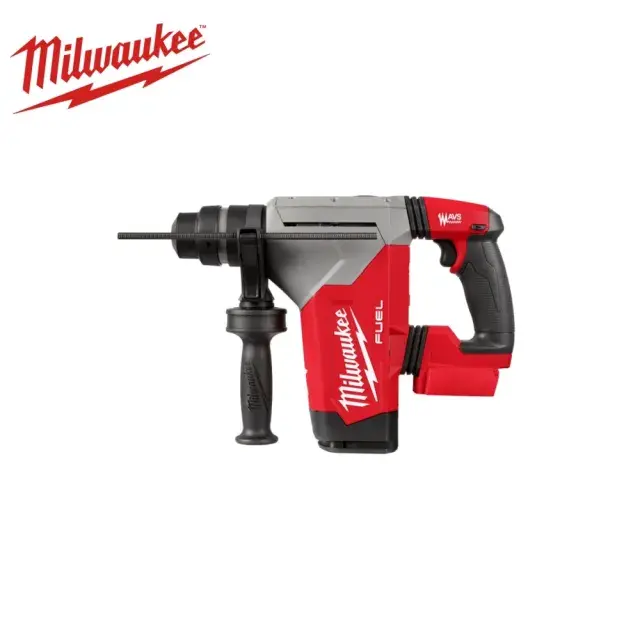
Exact M18FHP tool architecture shown. Tool only; battery, charger and M18FPDEX extractor are not included.
The M18FHP-0 combines a POWERSTATE brushless motor with 4.9J impact energy, 28mm concrete capacity, up to 4,600bpm and 800rpm. It provides rotary hammer, hammer-only and rotary-only modes, REDLINK PLUS electronics, ONE-KEY, AUTOSTOP Kickback Control and Milwaukee's Anti-Vibration System.
AUTOSTOP helps reduce hazardous rotation if a bit binds but cannot prevent every kickback event. AVS reduces vibration, not exposure time. The optional M18FPDEX HAMMERVAC uses a HEPA filter specified to capture 99.97% of particles above 0.3 microns, but that does not mean zero silica exposure.
At about $729 skin-only and roughly 4kg before a battery, this is expensive and heavy. Milwaukee optimises it around high-output packs, adding more system cost and working weight. The five-year tool warranty is valuable, but the tiny exact-model review sample cannot prove long-term reliability.
What owners say
Total Tools showed two exact-product reviews and a 100% snapshot. That is small evidence, so confidence rests more on exact architecture, safety systems, warranty and professional service than review volume.
Pros
- Exceptional 4.9J SDS Plus output
- 28mm concrete capacity
- AUTOSTOP and AVS
- REDLINK PLUS and ONE-KEY
- Optional dedicated HAMMERVAC
- Five-year tool warranty
Cons
- Very expensive
- Heavy before battery
- Best with costly high-output packs
- Tiny exact-model AU review pool
- Overkill for ordinary wall plugs
- Extractor costs extra
Cordless rotary hammer buying advice
Rotary hammer vs ordinary hammer drill
A conventional hammer drill uses mechanical percussion. A true rotary hammer uses a pneumatic hammer mechanism and SDS bit retention, making it much more appropriate for concrete, masonry, anchors, chasing and light chiselling. This guide covers cordless SDS Plus rotary hammers, not ordinary percussion drills.
SDS Plus vs SDS Max
SDS Plus is the practical class for anchors, plugs, medium concrete drilling, tile removal, chasing and light chiselling; typical cordless capacities are around 16–30mm. SDS Max uses a larger, incompatible shank for large drilling, heavy chiselling and structural demolition. More power does not automatically make SDS Max the right home tool.
Insert an SDS bit or chisel into the SDS holder and confirm it is positively locked before use, following the exact tool manual. Ordinary straight-shank drill bits do not insert directly into an SDS Plus holder; they need an appropriate compatible adaptor or chuck arrangement, and only where the exact tool and manual permit it.
Impact energy and concrete capacity
Impact energy helps with hard aggregate, larger holes and chiselling, but should not be the only ranking. The finalists are 2.5J Ryobi, 3.4J Bosch and 4.9J Milwaukee. Higher energy generally brings more weight, vibration, cost and battery draw. Maximum advertised diameter is not the ideal everyday range: buy for the hole size you drill most often.
Reinforced concrete can contain embedded steel or rebar, which changes ordinary masonry-bit performance. Use bits, accessories and methods suited to the material, keep checking for hidden services, and never blindly force a masonry bit through embedded metal.
Chiselling
Hammer-only mode supports tile and render removal, small chasing and light concrete chipping. An SDS Plus rotary hammer is not a demolition-hammer replacement; extensive slab breaking or structural work calls for a dedicated breaker or SDS Max-class tool.
Vibration and kickback protection
Bosch Vibration Control, Milwaukee AVS and Ryobi's anti-vibration handle reduce vibration; none makes exposure unlimited. Bosch KickBack Control and Milwaukee AUTOSTOP help reduce dangerous tool rotation when a bit binds, but cannot prevent every kickback event. Occupational exposure time and correct two-handed control still matter.
Concrete dust and silica
Concrete and masonry drilling can release respirable crystalline silica, a serious health hazard. Use suitable extraction at source, the correct vacuum or extractor class where required, appropriate respiratory protection and current Australian WHS controls. Bosch's GDE 28 D and Milwaukee's M18FPDEX are useful source-control options, but no onboard box or HEPA claim means zero exposure.
Battery size and working weight
Small batteries reduce weight but can limit runtime or sustained output. Large or high-output packs improve runtime and may improve performance, but increase working weight. Bare figures are only a starting point: add the battery, extractor and a large SDS bit, especially for overhead or ladder work.
Warranty and service
Bosch offers up to six years for eligible registered tools and a professional repair/spares network. Ryobi provides a four-year replacement warranty, extending eligible registered ONE+ tools to six years. Milwaukee lists a five-year tool warranty and professional service network. Australian Consumer Law applies separately; always check the current registration window and exclusions.
Rotary hammer and silica safety
Wear eye, hearing and appropriate respiratory protection. Secure loose workpieces with suitable clamps, a vice or proper support rather than relying on hand pressure. Fit and use the auxiliary handle, keep secure footing and hold the tool with both hands where the exact manual instructs. Check for hidden wiring and plumbing, and isolate services before chasing into walls or floors.
Use only the correct undamaged SDS bit or chisel, insert it fully and confirm it is positively locked in the holder as directed by the exact tool manual. Ordinary straight-shank drill bits require a compatible adaptor or chuck arrangement only where that tool and its manual permit one. Stay within rated capacity, remove the battery before bit changes or maintenance, let hot bits cool before handling, and never defeat anti-kickback or other safety systems.
Prolonged drilling and chiselling increase vibration exposure, so take appropriate breaks or rest periods during sustained concrete or demolition work. If reinforced concrete or rebar is encountered, use suitable bits, accessories and methods; do not blindly force a masonry bit through embedded metal, and keep hidden-services checks in place.
For concrete and masonry, use appropriate silica controls and source extraction. Overhead work adds falling-debris and dust hazards; use a secure ladder or platform. Follow the exact tool, extractor and PPE manuals plus applicable Australian workplace requirements.
Which cordless rotary hammer should you buy?
Buy the Bosch GBH 18V-28 DC for the best all-round combination of power, protection, vibration control, extractor compatibility and professional service. Buy the Ryobi RSDS18X if you are a serious DIY renovator who wants genuine brushless SDS Plus performance without professional-tool pricing. Buy the Milwaukee M18FHP-0 if you drill concrete frequently, use larger bits or chisel regularly enough to justify maximum SDS Plus output and weight.
Frequently asked questions
What is the difference between a hammer drill and a rotary hammer?
A hammer drill uses mechanical percussion; a rotary hammer uses a pneumatic impact mechanism and SDS bits, making it much more effective for repeated concrete drilling and light chiselling.
Is SDS Plus or SDS Max better?
SDS Plus is usually the right class for anchors, plugs, tile removal and light chiselling. SDS Max is larger and heavier for big holes and demolition; the bits are not interchangeable.
How many joules do I need?
Choose for your common hole size and workload. Around 2–3J suits many renovation tasks, while 3–5J helps with larger holes and repeated concrete work but adds weight and battery draw.
Can a rotary hammer remove tiles?
Yes, when the model has hammer-only mode and you fit a suitable SDS chisel. It remains a light-chiselling application, not structural demolition.
Do I need dust extraction when drilling concrete?
Concrete dust can contain respirable crystalline silica. Use appropriate source extraction, respiratory protection and Australian WHS controls; an onboard dust box alone does not guarantee safe exposure.