How we chose
We assessed exact current Australian models, availability, current skin price, full-size versus one-handed design, stroke length and rate, cutting capacity, brushed versus brushless motors, vibration control, orbital action, blade change, shoe adjustment, ergonomics, bare weight, battery-platform cost, runtime implications, warranty and service, exact-model Australian owner evidence and durability evidence. Worth Buying scores are editorial judgements, not calculations from customer stars. Manufacturer output and cutting claims remain manufacturer specifications.
Serious contenders reassessed
HiKOKI CR36DA(H4Z): is a genuine heavy-duty alternative with a 32mm stroke, four speed settings, orbital/swing cutting and twin-counterweight vibration control. At 4.8kg with its BSL36A18 battery, it is heavier and requires the 36V MultiVolt platform; it remains particularly credible for aggressive timber demolition.
Bosch Professional GSA 18V-28: combines a brushless motor, 28mm stroke, 230mm timber capacity and AMPShare compatibility. Bosch's claimed 1,100W corded-equivalent performance remains a manufacturer claim. The lighter 1.7kg GSA 18V-24 is the professional portability alternative, with a shorter 24mm stroke.
Makita DJR187Z: remains a strong mature LXT near-miss with a 32mm stroke, two speed ranges, vibration-control crank design and registered five-year skin-warranty eligibility. Its roughly Milwaukee-class price makes it difficult to displace DeWalt on balance or Milwaukee at the premium end.
Ryobi RRS18: is the useful $79 compact/one-handed alternative, with a 25.4mm stroke, 3,400spm and 1.65kg bare weight. It is better suited to pruning, confined spaces and lighter demolition than the full-size general-demolition role here.
AEG A18SRSBL0 and A18CRS0: are credible compact alternatives. Their 22mm and 19mm strokes respectively favour control and access rather than the bulk material removal prioritised by the three formal winners.
DeWalt 18V XR Brushless Reciprocating Saw DCS382N-XJ
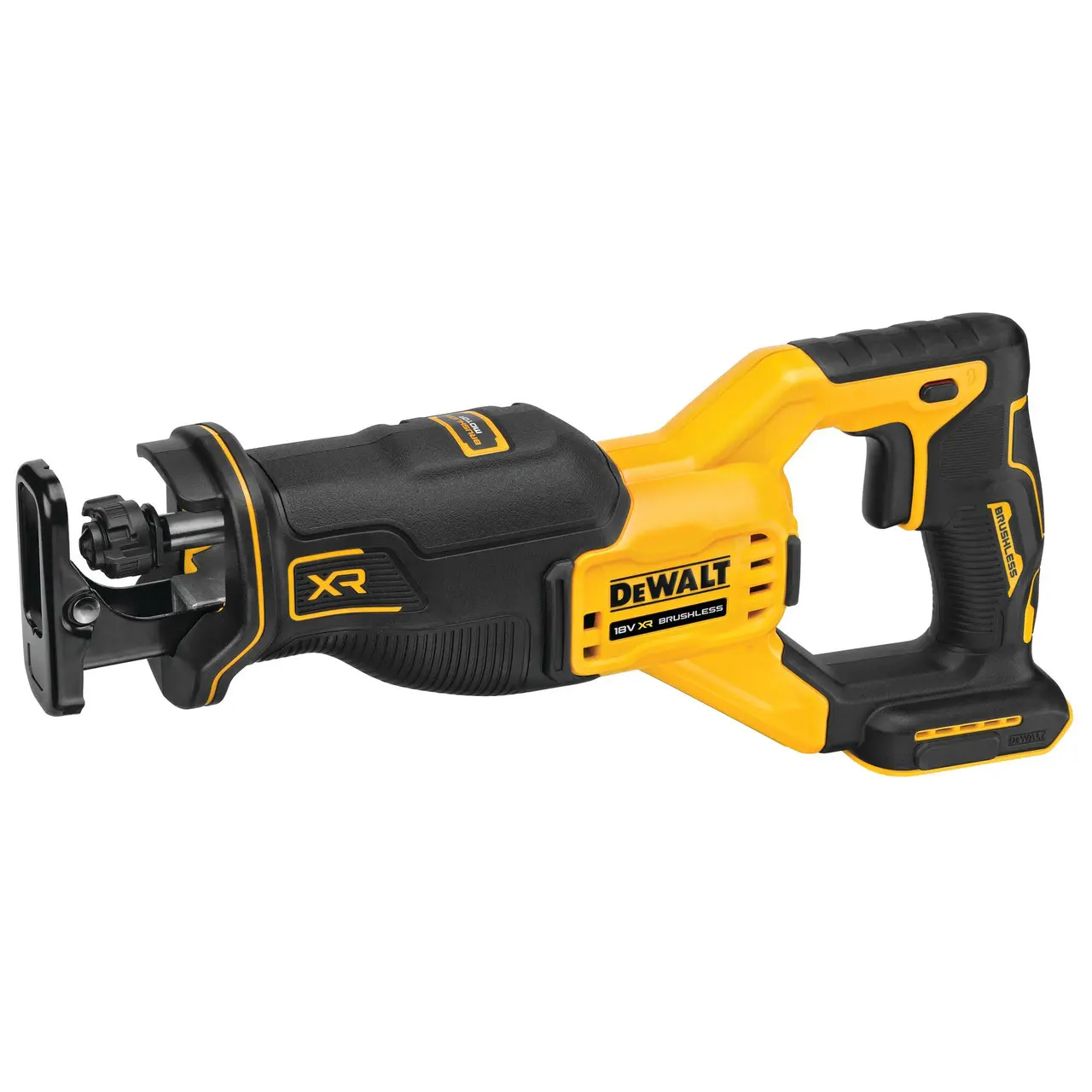
Exact DCS382N-XJ product image. Tool only; battery and charger are not included.
The exact Australian DCS382N-XJ is an 18V XR brushless skin with a verified 29mm stroke, up to 3,200spm and 2.3kg bare weight. It has a variable-speed trigger, lock-off switch, keyless two-position blade clamp, pivoting shoe and LED work light. DeWalt lists cutting capacities up to 300mm in wood and 130mm in steel pipe or section.
At roughly $342–$348, it sits far above DIY pricing but materially below the Milwaukee at normal retail. It is compact by full-size saw standards without being a one-handed cavity tool. A larger XR battery is sensible for sustained demolition, though it increases working weight.
The limitations are no orbital action and a thin exact-model Australian owner pool. DeWalt's current policy provides a one-year base limited warranty, extendable to three years for qualifying products registered within the required period.
What owners say
Bunnings showed about 4.3/5 from four exact-listing reviews during research. That is too small a sample to establish long-term reliability, and it is not merged with overseas DCS382 or adjacent DeWalt model feedback.
Pros
- Brushless motor
- 29mm stroke and fast 3,200spm
- Manageable 2.3kg bare weight
- Keyless blade clamp
- Pivoting shoe and LED
- Strong 18V XR ecosystem
Cons
- Thin exact-model AU owner evidence
- No orbital mode
- Skin price remains well above DIY models
- Full-size format is less convenient in tight cavities
Ryobi 18V ONE+ Reciprocating Saw R18RS-0
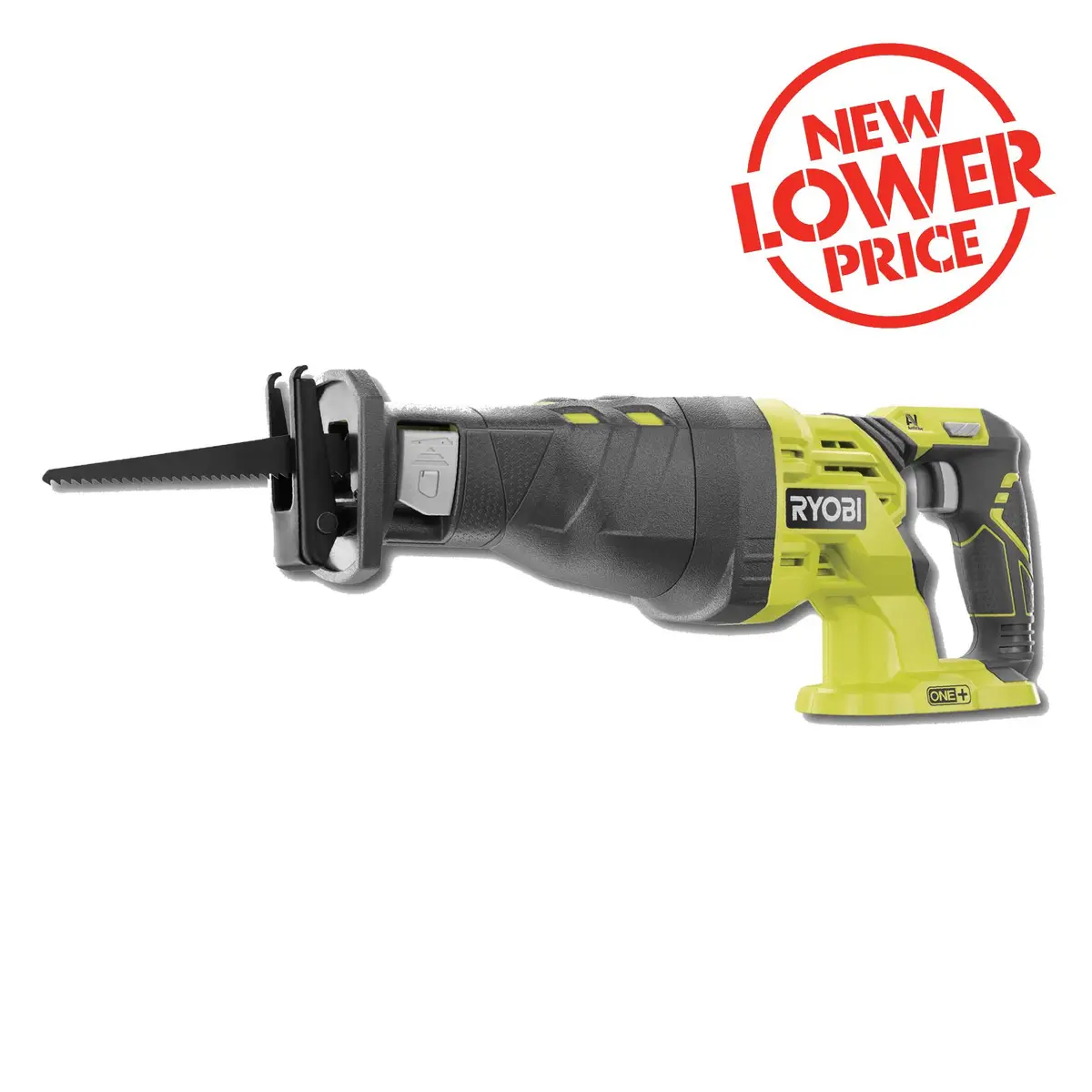
Exact R18RS-0 product image. Tool only; battery and charger are not included. Bunnings I/N 6210742.
Ryobi specifies a 28.5mm stroke, up to 2,900spm, 200mm timber capacity and 2.4kg bare weight. The variable-speed trigger, anti-vibration design and tool-free blade clamp are meaningful at this price. A reciprocating blade is supplied, but the battery and charger are not.
This is a brushed tool, not an HP Brushless model. It also lacks orbital action and is not particularly compact. A high-capacity ONE+ battery is preferable for heavier jobs, though occasional DIY buyers should not assume they need the largest pack for every cut.
Ryobi's published system is a four-year standard replacement warranty, with eligible registered ONE+ tools extending to six years when registered within the required period. Battery warranty is separate; this should not be described as a repair warranty.
What owners say
Ryobi / Bunnings showed approximately 4.8/5 from 303 reviews for the exact R18RS-0 product. That unusually large Australian pool provides stronger confidence than most rivals, but it is not combined with RRS18, kit or international saw reviews—and review volume is not the selection algorithm.
Pros
- Excellent price
- 28.5mm stroke
- 2,900spm
- Anti-vibration design
- Large exact-product owner pool
- ONE+ ecosystem and long registered warranty
Cons
- Brushed rather than brushless
- No orbital mode
- Not especially compact
- Replacement-oriented warranty model
- Less suited to continuous trade demolition
Milwaukee M18 FUEL SAWZALL M18CSX2-0
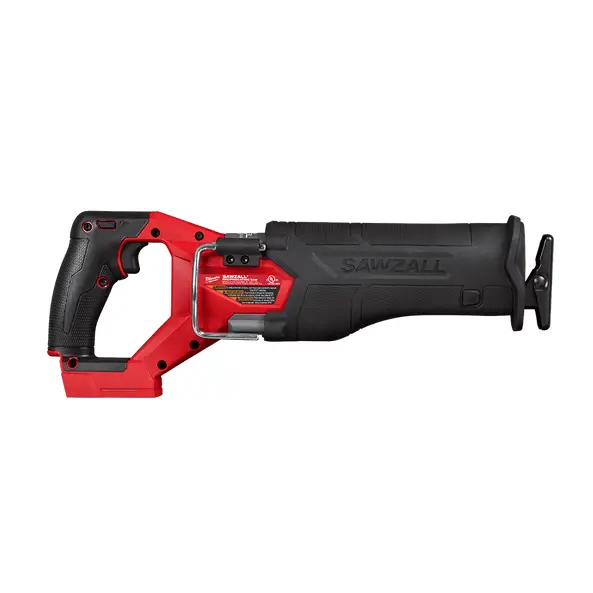
Exact M18CSX2-0 product image. Tool only; battery and charger are not included.
Milwaukee specifies a POWERSTATE brushless motor, 32mm stroke, up to 3,000spm, QUIK-LOK universal keyless blade clamp, adjustable shoe, LED and hang hook. REDLINK PLUS protects against overload, overheating and over-discharge, while the blade clamp and battery connection receive specific durability treatment.
The current normal specialist-retail snapshot is about $494. A limited promotion or redemption can reduce effective value, but it is kept separate from the tool's actual ticket price. At 3.1kg bare, it becomes a substantial working tool once paired with a 5Ah or larger battery.
This exact M18CSX2-0 does not have variable orbital action. It is also not the M18ONESX2-0 ONE-KEY model or the M18FSX-0 Super SAWZALL, so their tracking, cut-brake or orbital claims do not belong here. Milwaukee Australia publishes a five-year tool warranty under current terms.
What owners say
Pros
- 32mm stroke
- Strong brushless performance
- Reinforced battery connection
- Anti-corrosion blade clamp
- Electronic overload protection
- Adjustable shoe and five-year warranty
Cons
- Expensive
- Heavy once a battery is fitted
- No orbital action on this model
- Overkill for casual DIY
- Smaller owner pool than Ryobi
Cordless reciprocating saw buying guide
Full-size versus one-handed
Full-size saws favour longer strokes, sustained demolition, larger batteries and two-handed stability. They are heavier and harder to use in cavities. Compact one-handed saws suit plumbing, pruning, overhead work and tight spaces, but usually remove bulk material less aggressively. Neither format is universally better.
Stroke length and strokes per minute
Stroke length is the distance the blade travels each cycle. A longer stroke can expose more teeth and clear chips faster, but increases motion and vibration. Higher SPM can improve cutting rate, but it does not automatically make one saw faster: blade type, motor output, battery, orbital action and control all matter.
Orbital action
Orbital action adds a more aggressive elliptical motion that can speed timber demolition. It is less useful for metal or controlled cuts. None of the three formal winners has orbital action; the HiKOKI CR36DA is the strongest near-miss when orbital timber cutting is specifically important.
Vibration and fatigue
Reciprocating saws are inherently high-vibration tools. Counterweights, isolated handles, correct blade selection and good technique help, but no model is vibration-free. Long sessions can be fatiguing, and substantial workplace exposure should be managed under relevant occupational vibration guidance.
Battery size and runtime
Small packs reduce weight but may shorten runtime and limit sustained output. Larger or high-output packs can improve both, at the cost of more working weight. Cuts-per-charge claims are only meaningful when the material, blade, battery and test conditions are specified.
Choose the blade for the material
Use coarse TPI for timber, finer bi-metal or carbide teeth for metal, a demolition blade for nail-embedded wood and a long coarse pruning blade for branches. Check blade length, tooth pitch, material rating and the saw's application limits. The blade matters as much as the motor.
Pruning is a secondary use
A reciprocating saw can prune roots and smaller branches with a suitable pruning blade, especially in awkward spots. It is not automatically a cordless chainsaw replacement for larger or repeated log and branch work.
Reciprocating saw safety basics
Wear eye protection and hearing protection where appropriate. Secure the workpiece; check behind walls and material for wiring, plumbing and hidden hazards; isolate utilities before demolition; and keep both hands clear of the blade path. Remove the battery before changing blades, use a blade long enough that its tip cannot strike hidden surfaces at full stroke, and never force a bound blade. Do not use a bent, cracked, excessively worn or otherwise damaged blade. Let the blade stop before setting the tool down. Blades can become hot and sharp, so handle them with suitable gloves after cutting. Use appropriate respiratory protection and dust control for the material, and never treat a reciprocating saw as a precision woodworking tool. Read and follow the exact tool manual for blade installation, operation, maintenance and all model-specific safety instructions.
Which cordless reciprocating saw should you buy?
Choose the DeWalt DCS382N-XJ for the strongest overall mix of brushless performance, manageable size, price and professional battery ecosystem.
Choose the Ryobi R18RS-0 if you are a homeowner or occasional DIY user who wants full-size cutting capability for roughly $150.
Choose the Milwaukee M18CSX2-0 if you demolish frequently, already own M18 batteries or prioritise durability and sustained heavy work over price.
Frequently asked questions
What can a reciprocating saw cut?
Timber, nail-embedded wood, metal pipe, PVC, roots and more—provided the blade is long enough and rated for the material.
Is a brushless reciprocating saw worth it?
Usually for frequent or high-load use. Brushless designs can improve efficiency and durability, but occasional DIY users can still get strong value from a good brushed saw such as the Ryobi R18RS-0.
Can I use a reciprocating saw for pruning?
Yes, with the correct pruning blade and sensible branch sizes. For larger or repeated timber work, use the appropriate chainsaw and safety equipment.
What stroke length is best?
Longer strokes often favour aggressive demolition, while shorter strokes can help compactness and control. It is only one part of performance.
What size battery should I use?
Match the pack to the workload. Larger or high-output packs generally improve runtime and sustained performance but add weight. Stay within the tool manufacturer's compatible battery range.